

The Saudade Project
What if a story didn’t need to be written — only set in motion?

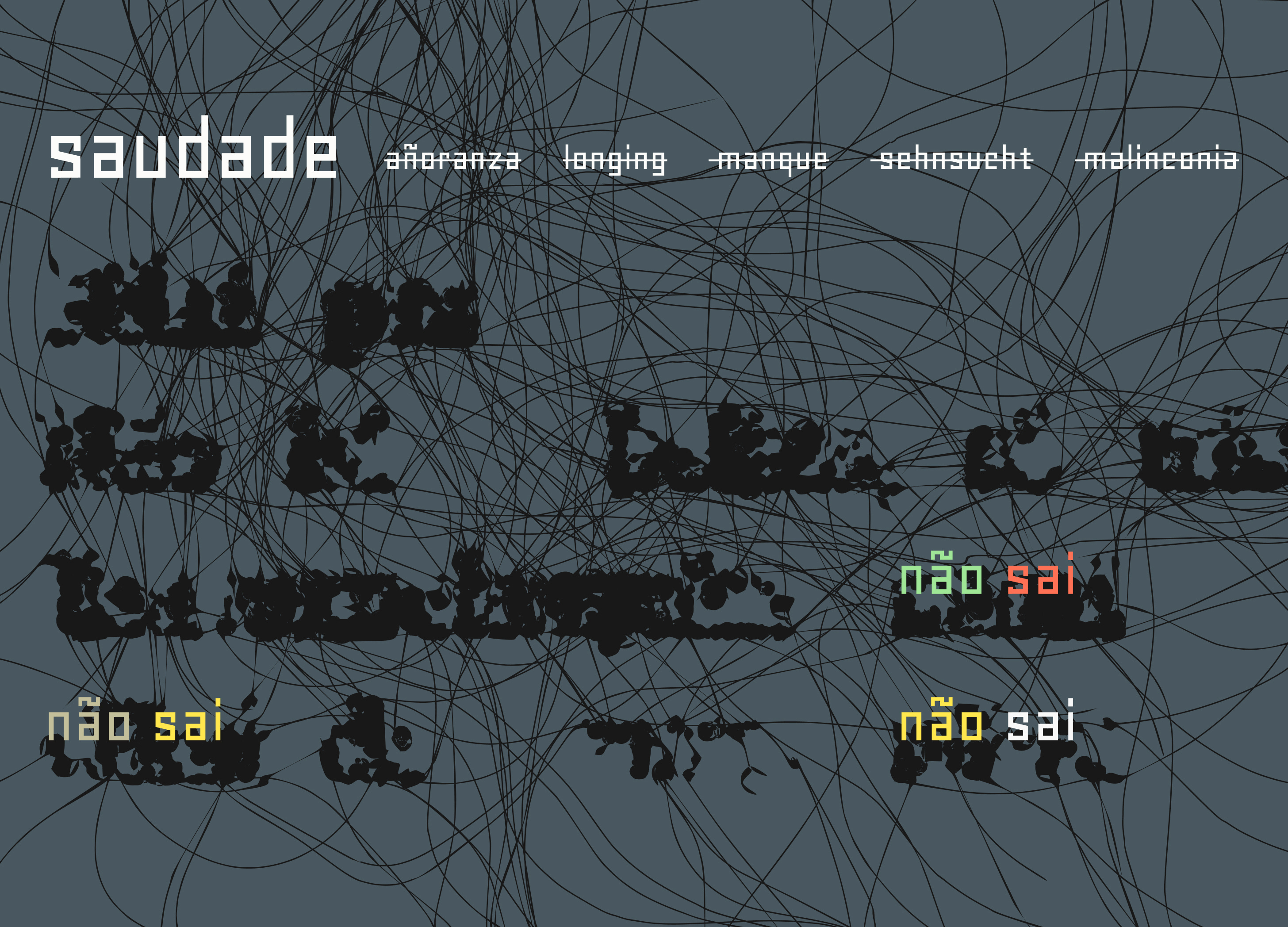
Intro
Saudade grew out of my work developing the Generative Brand Systems course at Pratt (Graduate Communications Design) and was recently presented at the Foro Iberoamericano de Investigación y Diseño in Madrid. It extends the principles from my earlier article on generative story structure.
Saudade began with that question. I wasn’t trying to create a new aesthetic. I wanted to build a generative system that leaves space for interpretation — a system able to absorb new ideas, new words, new memories, and keep evolving without breaking.
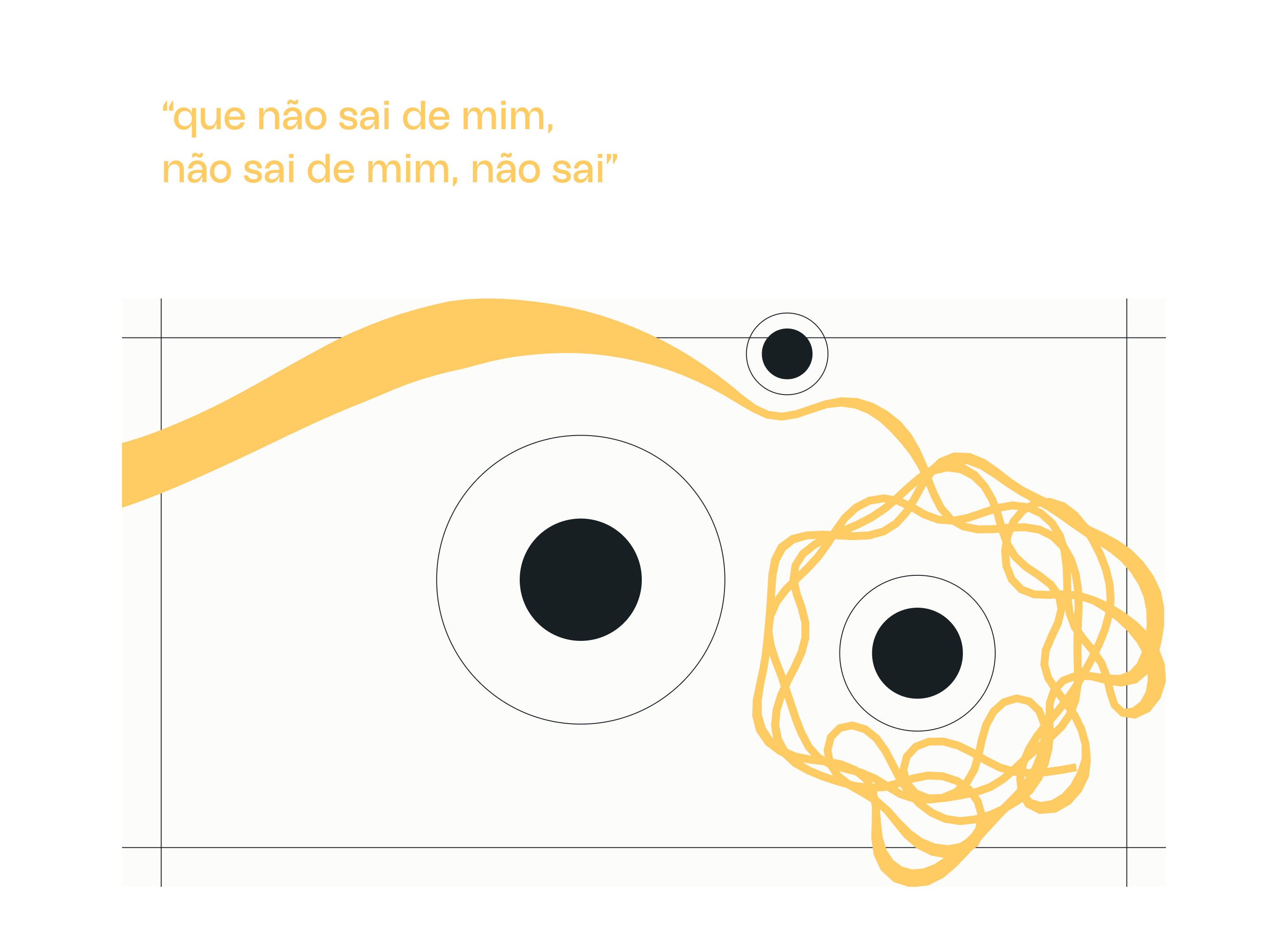
Challenging the notion of “generative” as “synthetic,” I started with abstraction — something entirely human.
Saudade is a Portuguese word that defies translation and names something that feels close and far at the same time. (In English, “longing” comes close but lacks the emotional depth.)
I treated that tension like physics:
far = attraction
near = repulsion
From that, a world opens.
An idea becomes a process. Design elements become a language able to incorporate experience and knowledge. The story expands and evolves (generative in the sense that it incorporates new material and adapts, rather than repeating itself.)
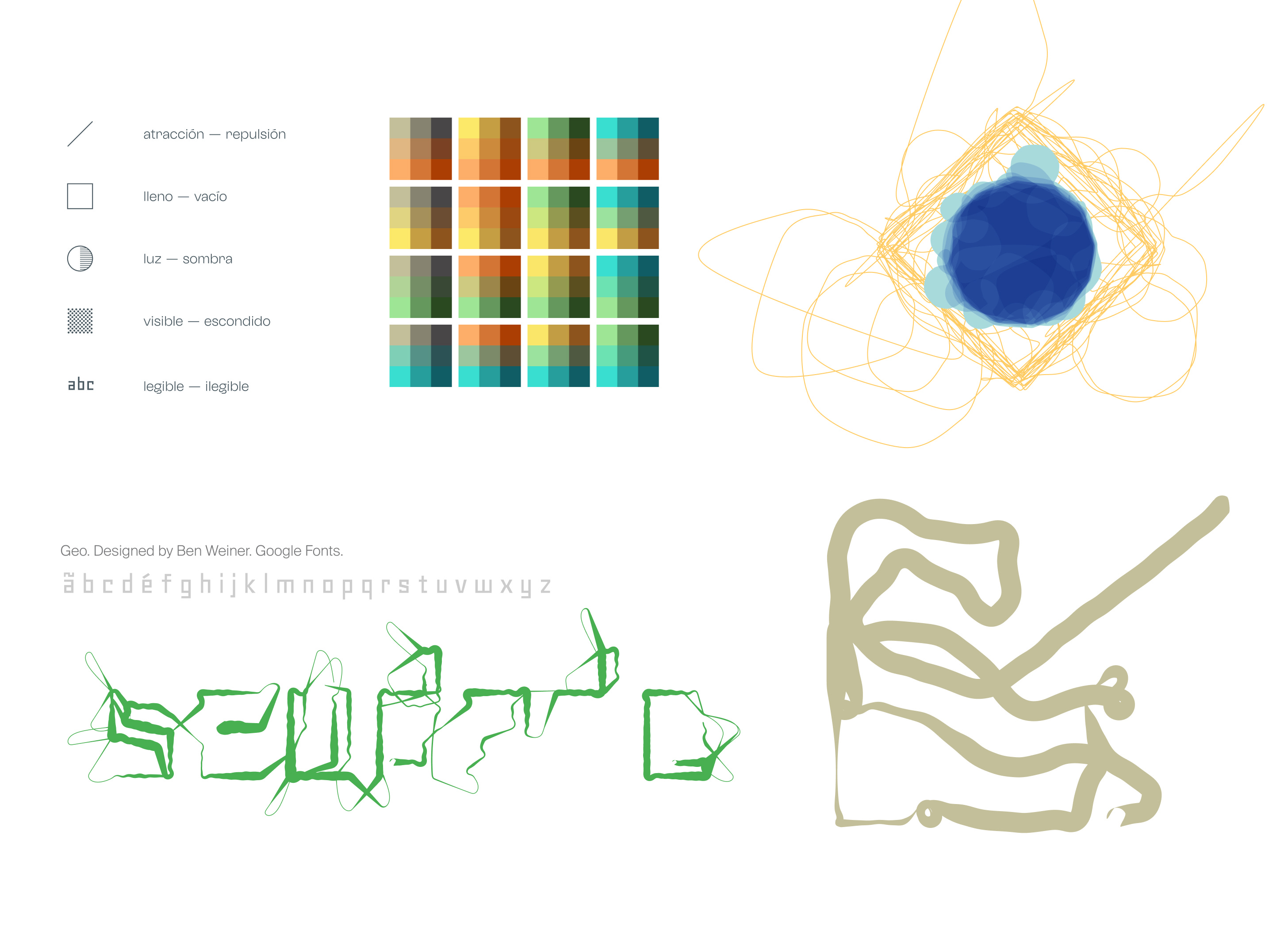
The system formed its identity and was ready to evolve through experimentation.
Lines wander like memory
Shapes distort under tension
Surfaces move memories forward or backward
Text becomes stylized or dissolves into texture
Colors get burnt and tinted by sun and shadow
Then I began feeding the system data. The Saudade logic folded whatever I gave it back into itself.
soundtracks and lyrics
synonyms and antonyms
statistical dataframes


Outro
Saudade is a generative language that adapts to whatever it receives. More than an aesthetic, it’s a way to surface meaning as new inputs come in. And because it’s open, anyone can use and extend it to make sense of changing contexts.
“In a world shaped increasingly by algorithms, the essential human capacity is not to process more information, but to deepen our ability to sense and shape emerging contexts. Presence becomes the source of future-conscious action.”
Otto Scharmer & Katrin Kaufer, Leading from the Emerging Future